
Beyond the Swipe: 11 Professional Strategies on How to Get Rid of Ants in the Kitchen and Commercial Food Areas
As a facility manager or business owner in the New York Tri-State area, you know that the changing seasons bring more than just warmer weather—they bring the inevitable surge of pests. For commercial facilities, particularly those with breakrooms, cafeterias, or food preparation zones, finding a line of ants tracing a path across a countertop is not just an annoyance; it represents a critical hygiene failure and directly threatens your health and safety compliance.
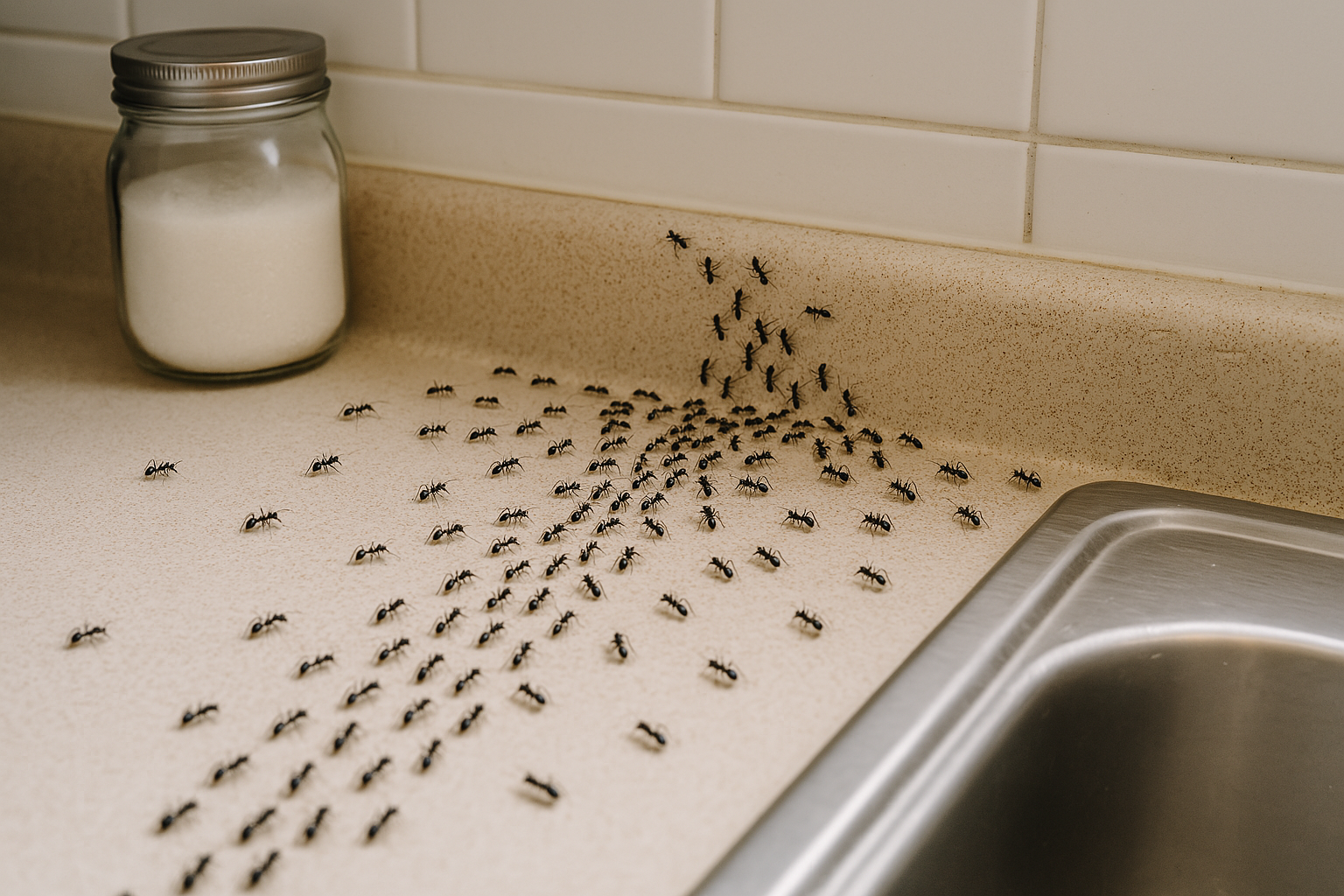
Ants don’t just feel attracted to food scraps; they seek the promise of reliable shelter and consistent moisture. They are natural team players that operate as a “superorganism,” using invisible chemical markers, called pheromones, to leave a high-traffic trail straight from their nest to your sugar dispenser. Killing a few stray ants simply raises the stakes, scattering the invasion and making the problem harder to trace. The real challenge is determining how to get rid of ants in the kitchen by eliminating the source, ensuring staff and client safety, and maintaining a pristine commercial environment.
This comprehensive guide, designed for the modern facility professional, provides a blend of immediate and sustainable Integrated Pest Management (IPM) solutions. These steps align perfectly with the high standards of cleanliness a trusted janitorial service partner provides.

The Hidden Threat: Why Ants are a Compliance Crisis in Commercial Spaces
For a home, ants are a nuisance. For a business, they are a liability. Their presence can trigger critical health code violations, lead to product contamination, and severely damage the professional reputation you work hard to maintain.
Unlike solitary hunters, ants function as a colony. A single foraging ant that discovers a spilled coffee droplet in your employee breakroom will immediately deposit a pheromone trail on its return journey. This invisible, chemical “GPS” signal tells thousands of other ants exactly where the caloric jackpot is located. This collective strategy is why smashing an ant on the spot is counterproductive—it only eliminates one member while reinforcing the urgency for others to follow the established route.
In a commercial setting, where kitchens and break areas often feed dozens or hundreds of people, the stakes are magnified. Effective pest control is therefore not an emergency measure, but an essential component of professional facility maintenance. To achieve true eradication, you must break the pheromone chain, cut off the food and water supply, and, ultimately, neutralize the central colony.
Foundational Defense: Facility Management Strategies to Deter Infestation
Before deploying any targeted solutions, the core of successful ant eradication in a commercial setting lies in impeccable cleanliness and preventative facility maintenance. This is where professional janitorial services truly shine, ensuring that daily and deep cleaning routines eliminate the primary attractants.
6. Aggressive Kitchen Cleaning with Odor Neutralizers
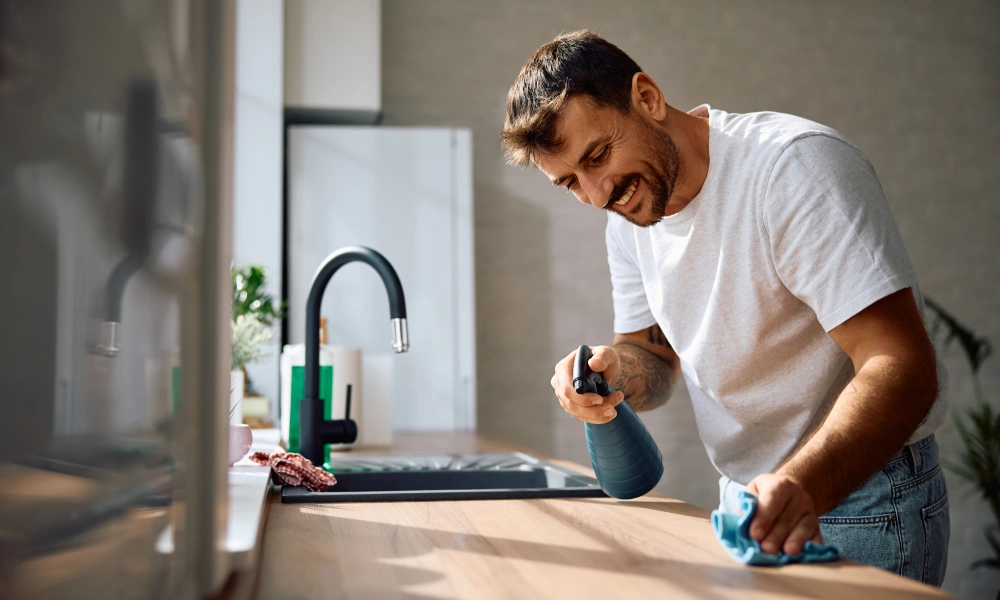
Once the infestation is addressed, the most critical step in long-term prevention is the thorough deep cleaning of the entire area. We strongly recommend using a cleaning agent like commercial-grade white vinegar, which is non-toxic and serves a dual purpose. Vinegar’s acidic properties cut through grease and grime, but more importantly, its strong, lasting odor effectively destroys the pheromone tracks ants rely on to navigate.
- Appliance Deep Cleans: Ensure appliances are pulled out and the areas beneath and behind them are meticulously cleaned. Crumbs and spills accumulate here, providing a continuous food source.
- Cabinetry and Shelving: Wipe down the inside and outside of all kitchen cabinets and shelving units, paying special attention to corners and seams where ants travel and leave trails.
- Trash Receptacles: Clean and disinfect the inside and outside of all trash cans. Use tightly lidded containers and insist that trash is taken out and secured in external dumpsters daily, or at least every 48 hours, especially in high-volume food areas.
7. Strict Food Storage and Sealing Protocols
n a commercial kitchen or busy breakroom, open food is an open invitation. Facility protocols must clearly state: staff must store all food items in airtight, sealed containers. This is especially true for items like sugar, flour, cereals, and employee snacks, which people often leave unsecured.
- Airtight Containers: Use heavy-duty, reusable plastic or glass containers for all dry goods.
- Refrigeration Enforcement: Require staff to refrigerate all opened condiments, juice containers, and perishable items immediately after use.
- Pet/Vendor Areas: If your commercial space has a vendor kitchen or a small area for service animals, ensure staff cleans those food bowls after every meal. They should not sit out overnight.
8. Mastering Moisture and Leak Prevention
Ants require water to survive, and a commercial environment often provides it in abundance. Eliminating sources of standing water is often the most overlooked solution on how to get rid of ants in the kitchen.
- Plumbing Inspection: Perform routine checks for minor leakages in sinks, dishwashers, ice machines, and other plumbing fixtures. Even a slow drip under a sink can be a reliable water source for a persistent ant colony.
- Immediate Spills and Drying: Do not allow wet sponges or towels to sit on counters or in sinks. Wipe down and dry all sink areas, counters, and window sills immediately after use.
- Drain Maintenance: Ensure floor drains and sinks are regularly cleaned to prevent the buildup of organic matter (biofilm) and excess moisture, which can provide both food and water for pests.
:max_bytes(150000):strip_icc()/TheSpruce_Howtogetridofandpreventodoroushouseants_colorv1-d55f1b3ffb8f44e1a34ba6d0a07bd4a0.png)
Targeted Action: 11 Professional Steps on How to Get Rid of Ants in the Kitchen
For existing or acute infestations, a more targeted, professional approach is required. These steps outline how to effectively track, treat, and seal the problem.
1. Locating the Source: The Inspection Mandate
Effective Integrated Pest Management (IPM) always begins with a rigorous inspection. Task your day porter or maintenance staff with observing the ant lines during peak activity. They are not wandering aimlessly; they are following the pheromone track. This line will lead you to their entry point, which could be a cracked window seal, a gap around a utility pipe, or a hairline fissure in the foundation near a food source.
- Focus Areas: Look behind baseboards, under sinks, near electrical conduits, and in utility closets.
- Nest Search: The trail will ultimately lead to the nest, which may be located under the kitchen floor, inside wet wall cavities, or in a hidden void space.
2. Utilizing Non-Repellent Solutions and Green Alternatives
When applying treatments, especially in a food-handling establishment, non-repellent and green options are always preferable. Repellent sprays only scatter the ants, forcing the colony to relocate to another hidden part of your facility. Non-repellent insecticides, when used by a professional pest control service, allow foraging ants to carry the product back to the nest, neutralizing the entire colony, including the queen.
- The Boiling Water Method: For outdoor nests or nests found in grout lines on durable, non-porous commercial floors, boiling water can be an immediate and completely non-toxic solution to destroy the colony. This method is often too risky for interior walls or delicate cabinetry.
- External Link (IPM): For further reading on safe and professional pest control methods for facilities, consult the U.S. Environmental Protection Agency’s guidance on Integrated Pest Management in Buildings.
3. Implementing Commercial-Grade Ant Baiting Systems
The most effective strategy for how to get rid of ants in the kitchen is to weaponize their communal nature against them using bait. Commercial-grade bait stations contain a sweet lure mixed with a slow-acting poison. The key is “slow-acting”—it must allow the ant to consume the bait and return to the nest. There, it shares the poisoned food with the queen and larvae before it dies.
- Strategic Placement: Place tamper-resistant bait stations directly along the established pheromone trails and near known entry points.
- Remove Competition: Ensure staff completely eliminates all other potential food sources (crumbs, sugar packets, sticky residue). The ants must then only take the bait.
4. DIY Borax Baiting: Proceed with Extreme Caution and Compliance
While many facility staff attempt a DIY solution, extreme caution must be exercised with borax in a commercial food-handling environment. The basic recipe involves mixing one part sugar with one part borax and two parts water.
- Safe Application: Never leave the solution exposed. Soak cotton balls or pads in the mixture and place them in a tamper-resistant, secured container (like a sealed station) where the ants can access the cotton, but children or pets cannot access the raw chemicals.
- Safety First: Post warnings and keep Material Safety Data Sheets (MSDS) on hand. This method should only be used temporarily and as part of a larger plan.
5. Leveraging the Power of the Professional Soap Spray
For individual ants or small scouting parties discovered on counters or food prep surfaces, avoid harsh chemical sprays. A simple, non-toxic soap spray is highly effective. The soap solution suffocates the ant by dissolving its waxy outer coating, and the residue is non-toxic to surfaces and people.
- Recipe: Mix 1 cup of water, 1 cup of white vinegar, and 1 to 2 tablespoons of commercial-grade dish soap in a spray bottle.
- Application: Spray directly onto the ants and wipe up immediately with a clean, disposable cloth. This solution also doubles as an exceptional, natural, multi-purpose cleaner for non-porous surfaces.
9. Natural Barriers: Using Citrus and Mint Oils
Leveraging the power of scent is an excellent, green, non-toxic component of pest management. Ants rely heavily on scent, and strong, non-food odors can disorient them and act as natural deterrents.
- Peppermint or Tea Tree Oil: Mix 10–20 drops of a strong essential oil (peppermint, cinnamon, or tea tree) with water and spray or wipe it along baseboards, window sills, and known entry points.
- Citrus Peels: Placing fresh lemon or orange peels in cabinets or near windows can deter them. Caution: Always check that acids like lemon juice or vinegar do not damage sensitive commercial materials like quartz or natural stone countertops, which may require rinsing immediately.
10. The Cayenne Perimeter: Using Pepper as a Natural Repellent
Ants are repelled by the strong capsaicin found in cayenne and black pepper. This method is particularly useful for creating an immediate, temporary barrier around a visible entry point in a non-food-contact area.
- Application: Sprinkle a small, thin line of cayenne or black pepper powder across the threshold of a window or a crack in the wall. The intense flavor will cause the ants to divert their trail elsewhere. Ensure this is only used in areas completely separate from food prep or serving surfaces.
11. The Ultimate Solution: Partnering with a Pest Control and Facility Expert
For persistent, high-level infestations, or for businesses that simply cannot afford the risk of a DIY solution, the final and most professional step is to call in the experts. While this guide provides knowledge on how to get rid of ants in the kitchen, effective pest management requires a multi-pronged, continuous effort that goes beyond a simple chemical treatment.
A certified janitorial and facility solutions provider like POC Commercial Cleaning is your first line of defense. We work in partnership with pest control operators, ensuring that the critical step—the continuous, daily removal of food, water, and pheromone trails—is executed flawlessly.
Our services, including Disinfecting Services and meticulous Janitorial Services, are designed to eliminate the conditions that invite pests, focusing on:
- Hospital-grade disinfection that removes food residues and high-touch contaminants.
- Consistent floor and carpet care to remove deep-seated crumbs and debris.
- Day porters who provide continuous maintenance during business hours, ensuring spills and messes are addressed instantly before an ant can find them.
Conclusion
Understanding how to get rid of ants in the kitchen starts with recognizing that pest control is a sanitation issue, not just a chemical one. By implementing stringent storage protocols, aggressively managing moisture, using safe and effective baiting techniques, and maintaining an unwavering commitment to cleanliness, you can protect your commercial space from the hidden threats that undermine compliance and reputation.
If your facility is facing a recurring issue, or if you simply need the peace of mind that comes from industry-leading, environmentally responsible cleaning, turn to the professionals. POC Commercial Cleaning Solutions offers tailored Janitorial and Facility Management services across New York, New Jersey, and Connecticut. We ensure staff maintains your pest-free environment with expert care and precision.
Request a consultation today to establish a proactive facility maintenance plan.